
How Do You Cater a Large Family Celebration at Home Without Overcatering?
There is a specific kind of anxiety that strikes every host the night before a marquee goes up in the garden. It usually involves standing in the kitchen, mentally multiplying portions by two hundred and wondering if it is still not enough. In many British households, particularly those where hospitality is measured by the abundance of the table, the fear of running short is far greater than the fear of waste. Yet a large family celebration at home, whether it is a milestone birthday, an aqeeqah, or a homecoming party for the whole extended family, should feel like a celebration for the host too, not a logistical siege.
Catering for a big crowd in a garden or a home marquee is rarely about the sheer volume of dishes on the table. It is about the balance of textures, the temperature of the food, and how precisely the menu is built for the numbers involved. General portion guidance, such as Eventbrite’s guide to calculating catering per person, backs this up at any scale: people eat better when they are not faced with an overwhelming spread, and a host who has trusted the numbers gets to actually enjoy the day. To learn more about our approach to large scale hospitality, you can read about us and our journey.
Focus on Quality Over an Overloaded Menu
The first step in planning a large celebration is resisting the urge to offer every protein and every style of cooking at once. Even for a gathering of 150 guests or more, two or three well executed “anchor” dishes will always outperform eight competing curries. If you try to serve five different mains alongside multiple sides, your guests take a small amount of everything, the flavours blur together, and the kitchen ends up managing five separate quantities instead of one.
We often suggest choosing one or two crowd pleasers that hold up well across a long service window. Dishes like Chicken Tikka Masala or a robust Roghan Josh are ideal because they stay succulent even several hours into a garden party. By keeping the main selection tight, the quality stays high and the portions are far easier to calculate accurately, an approach that also cuts down on food waste in line with WRAP’s guidance on reducing food waste. This is not just about the budget; it makes for a far more organised kitchen and service line.
The Golden Rules of Portion Control at Scale
Understanding exactly how much a large crowd eats is the most effective way to avoid overcatering, and the maths changes once you move past a hundred guests. For a standard evening celebration, most adults will consume roughly 500g to 600g of food in total across the whole meal. At 200 guests, that is a serious amount of food to prepare and serve hot, so a small buffer of around 10% is usually enough rather than the much larger margins hosts instinctively reach for. If you are serving Pakistani food for a large home celebration, the rice and bread often act as the “filler,” meaning the meat portions themselves can be calculated with real precision.
A reliable rule of thumb for a large family celebration is to allow for two to three pieces of grilled meat per person if you are also serving a main curry. If you are ordering from a catering menu, look for items that are easy to count at volume. Meat Seekh Kebab or Meat Chapli Kebab are far easier to portion accurately across two hundred guests than a large vat of stew where the meat to sauce ratio can drift. When you know exactly how many pieces are on the table, you can relax knowing everyone is accounted for, whether it is a milestone anniversary or celebrating Father’s Day with the whole family.
Strategic Starters That Keep a Large Crowd Moving
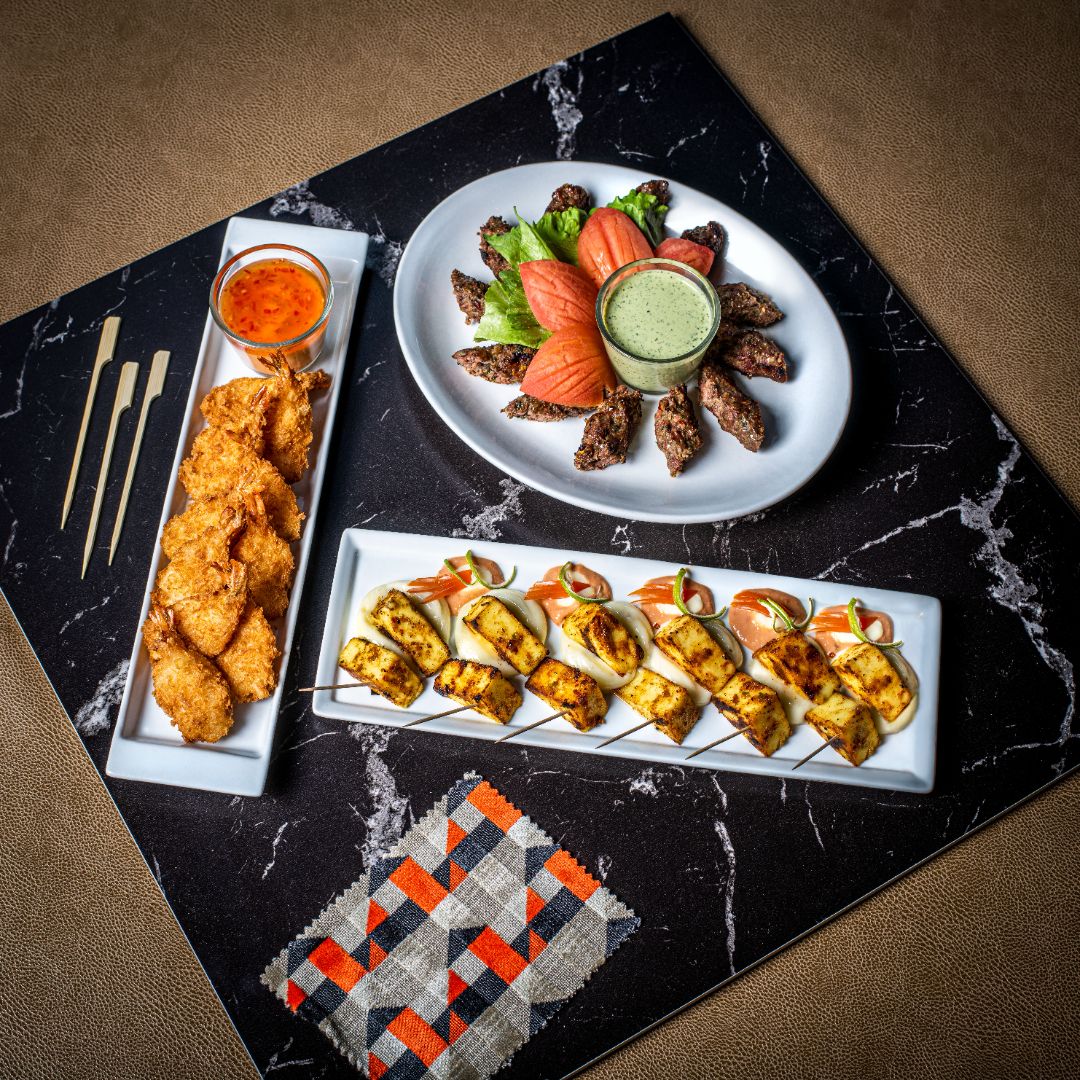
Starters are where most large celebrations lose control of the budget. It is tempting to put out crisps, nuts, and five different types of pastries for two hundred people, but this often ruins the appetite for the main event and multiplies the washing up. For a large gathering, choose two distinct starters served as a proper station rather than a scattering of side plates: one crunchy and one grilled. Cocktail Samosa and Pani Puri work brilliantly at scale because they are light, easy to handle standing up, and give guests something to do with their hands while they mingle.
If you are planning a large home celebration, consider using a “ready to serve” model rather than large shared platters. By choosing items that are already portioned, you eliminate the bottleneck of guests hacking away at a communal tray, which keeps a long buffet line moving. This is particularly important once children are part of a two or three hundred person gathering; smaller, bite sized pieces like Hariyali Chicken or Mozzarella Cheese Sticks are far more practical to serve quickly than large skewers.
How to Balance Your Side Dishes at Volume
Side dishes are the silent culprits of food waste at a large event. It is rare to see rice finished completely once the guest count climbs into the hundreds. To keep things manageable, stick to one type of rice and one type of bread rather than three variations of each. Pilau Rice (Zeera, Channa or Peas) is a versatile choice that complements almost any meat or vegetable dish without needing a second rice option to back it up. Rather than ordering three different types of Naan, stick to a generous, continuously replenished stack of Naan or Roti.
A fresh salad is essential to cut through the richness of the spices, but even at scale, simplicity wins. An Avocado Salad or a simple Fattoush provides the necessary crunch and acidity without the need for complex dressings that turn soggy sitting out over a long afternoon. This level of organisation is what separates a large home celebration that runs smoothly from one that quietly falls apart in the kitchen.
Planning for Milestone Occasions
A large family celebration at home carries its own weight, whether it is an aqeeqah, a fortieth wedding anniversary, or a homecoming party that has been months in the planning. These events deserve the same standard of catering as a formal venue booking, just delivered into a marquee in the garden rather than a banqueting hall. For these occasions, you might introduce a slightly more premium dish, such as Roasted Leg of Lamb or a generous Sindhi Biryani, to mark the day as genuinely significant.
Many families use a large home celebration as a useful opportunity to test flavour profiles ahead of an even bigger event, such as bespoke wedding catering or a significant professional corporate catering function. See which dishes the wider family gravitates towards. You might find that the Chilli Balti is a hit with the cousins but a bit too punchy for the grandparents, which is exactly the kind of detail worth knowing before the big day.
The most important thing to remember is that a large celebration is successful when the host is actually present for it. If you spend the whole afternoon in the kitchen worrying about whether there is enough food for two hundred people, you have missed the point of the gathering. By choosing a focused menu and trusting the logistics to a professional team, you can enquire about a tailored package that takes the guesswork out of catering at scale, leaving you free to enjoy the company of your guests.